The argument is over. But your body hasn't gotten the message. Your heart is still pounding. Your jaw is clenched so tight your teeth ache. You're pacing the room — or sitting completely still but vibrating inside, like the tension has nowhere to go. You keep replaying what they said. What you should have said. The perfect line you didn't think of until now. The conversation ended five minutes ago, but your hands are still shaking, your chest is tight, and your nervous system is still locked in the fight. You didn't lose the argument or win it. You just left it — and now you're stuck in the aftermath, running on adrenaline with no place to put it.
This guide covers how to calm down after an argument using fast, science-backed techniques that work in 60 seconds. No quiet room required. No journaling. Just a reset you can use the moment the door closes or the call ends.
Why You Can't Calm Down After an Argument
Arguments trigger one of the most intense sympathetic nervous system responses your body can produce — because they combine social threat with emotional pain. Your brain doesn't distinguish cleanly between a verbal attack and a physical one. Both activate the same alarm system.
Psychologist John Gottman's research on conflict in relationships calls this state diffuse physiological arousal (DPA). When your heart rate exceeds roughly 100 BPM during conflict, your capacity to listen, empathize, and think rationally drops significantly. Your autonomic nervous system shifts into fight-or-flight mode — and it doesn't flip back the moment the argument stops.
That's why the post-argument state often includes:
-
Elevated heart rate — stays elevated for 20 or more minutes after the conflict ends
-
Muscle tension — especially in the jaw, shoulders, chest, and hands
-
Mental replay loop — cycling through what was said, what you wish you'd said, and what they "really meant"
-
Urge to re-engage or "win" — the pull to send one more text, make one more point, get the last word
-
Shallow, rapid breathing — your body is still bracing for confrontation
-
Emotional flooding — anger, hurt, shame, and anxiety layered on top of each other
Here's the key insight: your body needs at least 20 minutes for full physiological recovery after intense conflict. But you can start the reset process in 60 seconds — and that early intervention is what prevents the spiral from getting worse.
6 Ways to Calm Down After an Argument
These techniques are designed for the raw, activated minutes right after a fight. They work whether you're alone in a room, sitting in your car, or staring at your phone after a heated text exchange.
1. Extended Exhale Breathing (Bring Your Heart Rate Down)
This is the single fastest way to calm down after a fight and the foundation of every other technique on this list.
How to do it:
-
Inhale through your nose for 3-4 seconds
-
Exhale slowly through your mouth for 6-8 seconds
-
Repeat for 5 full breath cycles
-
Focus only on the exhale — make it slow, steady, and audible
Why it works: Longer exhales activate the vagus nerve, which triggers your parasympathetic nervous system — the "rest and digest" counterpart to fight-or-flight. Research from Stanford University's Huberman Lab has demonstrated that this "physiological sigh" pattern is one of the fastest real-time interventions for lowering heart rate and cortisol. After an argument, your breathing is shallow and fast. Extending the exhale is a direct physiological override — you're manually telling your nervous system the threat is over.
2. Cold Water on Your Face or Wrists (Trigger the Dive Reflex)
When you can't calm down after an argument and breathing alone isn't cutting through the adrenaline, cold water provides a faster physiological interrupt.
How to do it:
-
Run cold water over the insides of your wrists for 10-15 seconds
-
Or splash cold water on your face, especially your forehead and cheeks
-
If available, hold an ice cube in each hand and squeeze
-
Focus on the sensation — let the cold be the only thing you notice
Why it works: Cold exposure on the face triggers the mammalian dive reflex, which automatically slows your heart rate and redirects blood flow to your core. This is a hardwired physiological response — it bypasses the thinking brain entirely. Applying cold to the wrists targets pulse points where blood vessels are close to the surface, providing a rapid cooling effect that your nervous system registers as a calming signal.
3. Walk Away Physically — Even 50 Steps
This isn't about storming off. It's about changing your physical environment to break the mental loop.
How to do it:
-
Stand up and walk — out of the room, down the hall, around the block
-
Count to 50 steps if you need a minimum target
-
Don't walk to make a point. Walk to change what your body is doing
-
Leave your phone behind if the argument happened over text
Why it works: Movement discharges adrenaline and cortisol through your muscles — the stress hormones that are keeping you activated. Changing your physical environment also interrupts the context-dependent memory loop. When you stay in the same room where the argument happened, your brain keeps replaying it. Moving to a different space gives your brain new sensory data to process, which weakens the replay cycle. Even 50 steps is enough to shift your physiological state.
4. Name the Emotion, Not the Argument
When you're still angry after an argument, your mind defaults to building a case: who was right, who was wrong, what they did. This keeps the fight alive internally. The alternative is to name what you're actually feeling underneath.
How to do it:
-
Pause and ask yourself: "What am I feeling right now?"
-
Name the emotion specifically: "I'm feeling hurt." "I'm feeling disrespected." "I'm feeling scared."
-
Say it out loud or write it down — even one word
-
Do NOT name the argument: avoid "They were wrong" or "I can't believe they said that"
Why it works: Neuroscience research on affect labeling shows that naming an emotion reduces its intensity. When you label a feeling, activity in the amygdala (your brain's alarm center) decreases, and activity in the prefrontal cortex (your reasoning center) increases. This is sometimes called "name it to tame it." The shift from arguing about the argument to identifying the feeling moves you from reactive mode to reflective mode — and that's where the calm starts.
5. Delay the Replay (The 30-Minute Rule)
The mental replay loop is one of the most persistent parts of post-argument anxiety. You keep rehearsing what happened, what you should have said, what they really meant. The fix isn't to stop thinking about it entirely — that usually backfires. The fix is to schedule the replay.
How to do it:
-
When the replay starts, tell yourself: "I'll think about this in 30 minutes"
-
Set a timer on your phone if it helps
-
If the thoughts come back before the timer, repeat the same instruction — calmly, without frustration
-
When the 30 minutes are up, you can revisit it — but you'll be doing so from a calmer baseline
Why it works: This technique comes from cognitive behavioral therapy and works because it doesn't suppress the thought — it redirects it. Suppression ("don't think about the argument") triggers a rebound effect where you think about it even more. Delay ("I'll think about it later") gives your brain permission to release it temporarily. By the time 30 minutes pass, your nervous system has cooled enough that the replay feels less urgent and less emotionally charged.
6. Discharge the Energy Physically
After a fight, your body is flooded with stress hormones that were meant for physical action. If you don't give that energy somewhere to go, it stays trapped as tension, restlessness, and agitation.
How to do it:
-
Squeeze ice cubes in both hands — hard — for 15-30 seconds
-
Press your palms together as hard as you can for 10 seconds, then release
-
Pace deliberately — not anxiously, but with slow, intentional steps
-
Push against a wall with both hands for 10 seconds, then let go
-
Grip and release a towel, stress ball, or your own fists — 5 cycles
Why it works: These are called bilateral physical releases — they give your muscles a specific target for the tension that's built up during the argument. The squeeze-and-release pattern mimics the natural resolution cycle your nervous system expects after a threat: exertion followed by release. Without this step, many people stay stuck in a state of low-grade physical activation for hours after a fight, which makes it harder to sleep, think clearly, or have a productive follow-up conversation.
The 60-Second Post-Argument Reset (Quick Reference)
Need the shortest version? Here's the full sequence you can run through the moment the argument ends:
| Step | Action | Time |
| 1 | Extended exhale — 5 slow breath cycles (inhale 4 sec, exhale 8 sec) | 30 sec |
| 2 | Cold water on wrists — run cold water over inner wrists | 10 sec |
| 3 | Name the feeling — "I'm feeling ___" (one word) | 5 sec |
| 4 | Walk 50 steps — leave the room, change your environment | 15 sec |
This is not a fix for the underlying conflict. It's a nervous system reset — a way to get your body out of fight mode so your brain can start thinking clearly again. Everything else (the conversation, the repair, the resolution) comes after.
Why Speed Matters After a Fight
Post-argument, your brain wants to keep fighting. It rehearses better comebacks. It builds a stronger case. It drafts the text message that will finally make them understand. Every minute you stay in this activated state, the story gets more fixed, the emotions more entrenched, and the urge to re-engage grows stronger.
This is why so many arguments have a round two — not because new information surfaced, but because neither person calmed down enough before restarting the conversation. You went back in with a heart rate above 100, a case already built, and zero capacity to listen.
A fast reset doesn't mean you avoid the conversation. It means you prevent the escalation spiral that turns a single disagreement into a hours-long cycle. The 60-second reset buys you the 20 minutes your nervous system actually needs — and those 20 minutes are what make the difference between a productive follow-up and another fight.
When Post-Argument Stress Lingers
The techniques above are designed for the immediate aftermath. But sometimes the stress of an argument doesn't stay in the moment — it follows you through the day, disrupts your sleep, and colors everything else.
Common situations where post-argument anxiety persists:
-
After a fight with a partner — especially if the issue is recurring and unresolved
-
After a disagreement with a coworker — where you have to see them again tomorrow and pretend things are fine
-
After an argument with a family member — where the history runs deep and the patterns are old
-
After a conflict with a friend — where you're unsure if the relationship can hold the weight of the disagreement
-
After a heated exchange with a stranger — road rage, a confrontation in public, an aggressive comment online
-
After reading an upsetting message — where the argument happened through text and you're left staring at a screen with no way to discharge the energy
If arguments consistently leave you activated for hours, unable to sleep, or replaying the conflict on a loop that won't stop, the issue may be less about the argument itself and more about how your nervous system processes conflict. That pattern is worth paying attention to.
Some people keep a fast-acting reset tool nearby for moments like this — something they can reach for when the argument is over but the adrenaline isn't. The goal is always the same: bring your heart rate down, interrupt the replay, and give your body the signal that the threat has passed. Whatever method you use, the principle is the same — speed matters, and having something ready before you need it is better than searching for it mid-spiral.
Frequently Asked Questions
How long does it take to calm down after an argument?
Research suggests it takes a minimum of 20 minutes for your body to return to baseline after intense conflict. Psychologist John Gottman's work on diffuse physiological arousal shows that attempting to continue or resolve a conflict before that 20-minute window has passed usually leads to escalation, not resolution. You can accelerate the process with breathing techniques and physical resets, but give yourself at least 20 minutes before re-engaging.
Why can't I stop replaying the argument in my head?
Mental replay after an argument is your brain's attempt to resolve an unfinished threat. Your nervous system doesn't distinguish between a conflict that ended and one that's still happening — it keeps processing the event until it feels "complete." This is normal, but it can become a loop. The most effective interrupt is the 30-minute delay technique: tell yourself you'll revisit it in 30 minutes, and redirect your attention to a physical task or sensation.
How do I stop being angry after a fight?
Anger after an argument is often a surface emotion covering something deeper — hurt, fear, shame, or a sense of being unheard. Start by naming the emotion underneath the anger: "I'm feeling disrespected" or "I'm feeling scared this won't get better." Then use physical discharge (squeezing ice, pressing palms, walking) to move the adrenaline through your body. Anger that has somewhere to go physically tends to soften faster than anger you try to think your way out of.
Is it normal to shake after an argument?
Yes. Shaking, trembling, or feeling physically jittery after a fight is a normal physiological response to intense stress. Your body released adrenaline and cortisol during the argument, and the shaking is your nervous system attempting to discharge that energy. It's the same mechanism that causes animals to shake after escaping a predator. Don't fight it. Let the trembling happen, and pair it with extended exhale breathing to help your nervous system complete the cycle.
Should I talk about the argument right away or wait?
Wait. Gottman's research is clear on this: attempting to resolve a conflict while your heart rate is still elevated above 100 BPM almost always makes it worse. You lose access to empathy, active listening, and flexible thinking when you're physiologically flooded. Take at least 20 minutes. Use that time for breathing, walking, or any of the techniques above. Then return to the conversation when you can listen without your body still fighting.
Can breathing exercises help after a fight?
Yes — and they are one of the most well-supported interventions in stress research. Extended exhale breathing (inhale 3-4 seconds, exhale 6-8 seconds) activates the parasympathetic nervous system through the vagus nerve, directly counteracting the fight-or-flight response that an argument triggers. Studies have shown measurable reductions in cortisol and heart rate from just 5 breath cycles with elongated exhales. It's the single fastest tool you have in the immediate aftermath of a fight.
Key Takeaway
Longer exhale. Cold water. Name the feeling. Walk away.
The argument is over — let your body catch up. You don't need to resolve the conflict in the next five minutes. You need to get your nervous system out of fight mode first. Everything else — the conversation, the repair, the understanding — starts after the reset.
If arguments frequently leave you in a prolonged state of distress, or if you experience panic symptoms, dissociation, or an inability to function after conflict, consider reaching out to a mental health professional. The techniques in this article address normal post-argument stress responses and are not a substitute for professional care.
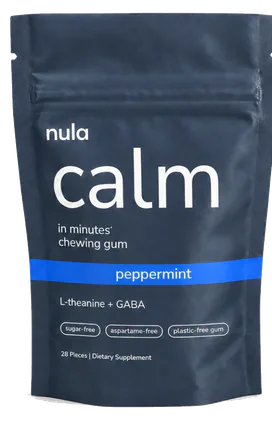
Nula Calm Gum
100 mg L-theanine + 50 mg GABA in every piece. caffeine-free. chew 1–2 pieces for at least three minutes.
shop calm