You are getting ready. Checking the mirror one more time. The restaurant is in 20 minutes and your stomach is doing something unhelpful. You have changed shirts twice. You are rehearsing opening lines in your head, and every single one sounds fake. Your hands are slightly damp. You keep picking up your phone, putting it down, and picking it up again.
It is a first date — not a presentation, not a performance review, not an exam — but your body does not seem to know the difference. The racing heart, the tight chest, the restless energy that will not settle. This guide is about calming first date nerves in the minutes you actually have — while getting ready, in the car, or sitting at the table waiting for them to arrive. Fast, practical, and grounded in how your nervous system actually works.
Why First Dates Trigger Your Stress Response
The nervousness you feel before a date is not a sign that something is wrong. It is your nervous system responding to a very specific combination of psychological triggers. When your brain detects social evaluation — someone forming an opinion of you in real time — combined with uncertainty and vulnerability, it activates the sympathetic branch of your autonomic nervous system. This is the same fight-or-flight response that evolved to protect you from physical threats.
First dates combine two powerful triggers at once. The first is novelty — an unfamiliar person, an unfamiliar setting, and a conversation with no script. The second is vulnerability — you are putting yourself out there, emotionally exposed, with no guarantee of how it will be received. Your brain reads this combination as risk, and the cascade begins before you have any say in the matter.
The symptoms are predictable and universal:
-
Butterfly sensation in your stomach — this is gut-brain axis activation; your enteric nervous system responds directly to emotional stress
-
Sweaty palms — your body's cooling system fires preemptively in anticipation of exertion
-
Racing thoughts about what to say — working memory narrows under stress, making spontaneous conversation feel impossible
-
Self-consciousness about appearance — threat detection shifts your attention inward, magnifying perceived flaws
-
Elevated heart rate — adrenaline and cortisol flood your system, preparing your body for action that never comes
Here is the key insight: nervousness before a date usually means you care — not that something is wrong. You would not feel this way if the outcome did not matter to you. The goal is not to eliminate the feeling entirely. It is to settle your nervous system enough that you can actually be yourself when you sit down across from them.
5 Ways to Calm First Date Nerves
Each of the following techniques is designed for the real conditions surrounding a date: limited time, no equipment, and the need to look composed. They are ordered by speed and ease of use.
1. Extended Exhale Breathing
How to do it:
-
Inhale through your nose for 4 seconds
-
Exhale slowly through your mouth for 6-8 seconds
-
Focus on making the exhale noticeably longer than the inhale
-
Repeat for 3-5 cycles
Why it works:
The extended exhale is the fastest voluntary tool for nervous system regulation that exists. When your exhale is longer than your inhale, it directly stimulates the vagus nerve, which sends a signal to your brain to lower heart rate and reduce cortisol output. Neuroscientist Andrew Huberman has highlighted this technique extensively — research shows that cyclic physiological sighing can reduce subjective stress more effectively than meditation in controlled trials. Three to five breath cycles is enough to produce a noticeable shift in how your body feels. Your heart rate slows, your chest loosens, and the frantic mental chatter drops a notch.
When to use it: While getting ready at home. In the car before you walk in. At the table while you wait for them to arrive. It is completely silent and invisible to anyone around you.
2. Reframe Nerves as Excitement
How to do it:
-
Notice the physical sensations you are experiencing — racing heart, buzzy energy, tight chest
-
Say to yourself, silently or aloud: "I am excited, not nervous"
-
Do not try to force the sensations to stop — just change the label you are putting on them
-
Repeat once or twice if needed
Why it works:
Research from Harvard Business School, published by Alison Wood Brooks, found that people who reframed anxiety as excitement performed significantly better in high-pressure situations than those who tried to calm down. The reason is counterintuitive: anxiety and excitement are nearly identical in the body. Both involve elevated heart rate, adrenaline, and heightened alertness. The difference is entirely in the story your mind tells about those sensations. Trying to force calm from a state of high arousal is swimming upstream. Shifting the label from "I am terrified" to "I am excited to meet this person" works with your body's current state rather than against it. It is faster and measurably more effective.
When to use it: The moment you catch yourself spiraling while getting ready. In the car. Walking up to the restaurant. This technique is entirely mental and takes less than 10 seconds.
3. Lower the Stakes Mentally
How to do it:
-
Remind yourself: "This is one conversation. Not a decision. Not a commitment. Just a conversation."
-
Reframe the date as a low-pressure chance to meet someone new — not an audition
-
Tell yourself: "The worst realistic outcome is that we do not click, and that is fine"
-
If helpful, add: "I am not deciding anything tonight. I am just finding out if I enjoy talking to this person."
Why it works:
Most first date anxiety comes from inflated stakes. Your brain treats the date as if the outcome is permanent and consequential — as if a bad date means something about your worth or your future. In reality, a first date is one conversation with one person on one evening. Nothing is being decided. Nobody is signing anything. When you actively remind yourself of the actual stakes — which are low — the threat signal in your brain recedes. Your prefrontal cortex re-engages, your breathing naturally deepens, and the catastrophic thinking loses its grip. The date is not a verdict. It is an introduction.
When to use it: While getting ready, when you notice your thoughts escalating. In the car when you start imagining worst-case scenarios. Any time the internal pressure feels disproportionate to the situation.
4. Arrive Five Minutes Early and Settle
How to do it:
-
Get to the restaurant, coffee shop, or bar a few minutes before the agreed time
-
Sit down. Order a glass of water
-
Look around the room. Notice the lighting, the music, the other people
-
Take 2-3 slow breaths
-
Let your body adjust to the space before they arrive
Why it works:
Arriving early eliminates one of the biggest anxiety amplifiers: the rushed entrance. When you walk in already flustered — scanning the room, looking for someone you have never met in person, trying to appear composed while your heart is racing — you start the interaction at your most activated state. Arriving early flips this dynamic entirely. You get to choose your seat, orient to the environment, and let your nervous system recognize that the space is safe. By the time they walk in, you are already settled. You are the calm one. You greet them from a position of ease rather than scrambling to catch up. The first five minutes of a date set the tone for everything that follows, and those five minutes are shaped by the five minutes before.
When to use it: Every date. This is the simplest structural change you can make, and it consistently reduces pre-date anxiety more than any mental technique alone.
5. Focus on Curiosity Over Performance
How to do it:
-
Replace the question "Will they like me?" with "What will I learn about this person?"
-
Go in with genuine curiosity — think of 2-3 things you are actually interested in finding out about them
-
Shift your mental role from "person being evaluated" to "person discovering something new"
-
Remind yourself: you are also deciding if you like them
Why it works:
Performance anxiety on a date comes from a specific cognitive frame: you are the one being judged, and they are the judge. This frame is not only inaccurate — they are nervous too, and they are also hoping you like them — it is also the single biggest driver of stilted, unnatural conversation. When you shift from performance mode to curiosity mode, your attention moves outward instead of inward. You stop monitoring yourself ("Am I being interesting enough? Did that joke land?") and start actually listening to what they are saying. This is the shift that makes a date feel like a real conversation instead of a job interview. People connect with someone who is genuinely interested in them, not someone who is performing a version of themselves.
When to use it: As a mental frame for the entire date. Set the intention before you leave the house or before you walk in. It is not a one-time trick — it is an orientation that shapes the entire evening.
The 60-Second Reset Routine
If you only have one minute before walking in, use this sequence. It combines the most effective elements from the techniques above into a single repeatable routine.
| Step | Action | Time |
| 1 | Extended exhale — Inhale for 4 seconds, exhale for 6-8 seconds. Repeat 5 cycles. | 30 seconds |
| 2 | Reframe — Say to yourself: "I am excited, not nervous." | 5 seconds |
| 3 | Lower stakes — Say to yourself: "Just one conversation." | 5 seconds |
| 4 | Arrive and settle — Walk in, sit down, order water, breathe, look around. | 2 minutes before |
This routine works in a car, a rideshare, a restroom, or standing outside the venue. Repeat it as many times as you need. Each cycle takes under a minute and compounds — the second round is calmer than the first.
Why Speed Matters for Date Nerves
Date nerves do not build gradually over hours. They spike in short, intense windows — the 10 to 15 minutes before you meet. While you are getting dressed. During the drive over. Standing outside the restaurant looking at your phone. That is when the anxiety peaks, the thoughts spiral, and the temptation to cancel feels strongest.
Once you are actually talking, the nerves usually fade. Conversation creates its own momentum. But if you arrive already deep in a spiral, the first five minutes of the date feel stiff and forced. Your voice sounds different. Your laugh comes out wrong. You are physically present but mentally still in the car, trying to settle down.
A quick reset before you walk in changes the trajectory of the entire evening. It does not make you fearless. It brings you down one notch — from overwhelmed to manageable — so that your actual personality can come through in those critical opening minutes.
When Date Anxiety Shows Up
First date nerves are the most common version, but date anxiety surfaces across a wide range of situations, each with its own specific pressure:
-
First date with someone entirely new — maximum novelty, maximum uncertainty, the classic trigger
-
Meeting someone from a dating app in person for the first time — the gap between the online version and the real-life version creates extra self-consciousness
-
First date after a breakup — old wounds mix with new hope, and the nervous system is often still sensitized from the previous relationship
-
A date with someone you really like — the higher the perceived stakes, the stronger the anxiety response
-
Double dates or group settings — social complexity multiplies; now you are being evaluated by multiple people simultaneously
-
Video call dates — the added stress of seeing yourself on screen, managing technology, and performing in your own home
Each of these situations benefits from the same core techniques, adapted to the context. If you also experience anxiety in other high-pressure social or professional settings, you may find related strategies in posts about calming nerves before a presentation and managing pre-call anxiety.
Before a date, choose one manageable next step, such as checking the address or thinking of a question to ask. Leave enough time to arrive without rushing. No product or routine can guarantee how you will feel when you get there.
Frequently Asked Questions
How do I calm my nerves before a first date?
The fastest method is extended exhale breathing: inhale for 4 seconds, exhale for 6-8 seconds, and repeat for 3-5 cycles. This directly stimulates the vagus nerve, which signals your brain to lower heart rate and reduce cortisol. Combine it with a mental reframe — telling yourself "I am excited, not nervous" — and you can shift your nervous system state in under 60 seconds. The key is not eliminating nervousness entirely but reducing it enough that you can make eye contact, listen, and respond naturally. Focus on speed and simplicity — the techniques that work fast are the ones you will actually use in the parking lot or the rideshare.
Why do I get so nervous before dates?
Your brain interprets a first date as a social evaluation combined with vulnerability, which triggers the same fight-or-flight response as a physical threat. This is an automatic function of your autonomic nervous system and has nothing to do with how confident or attractive you are. The symptoms — racing heart, sweaty palms, mental fog, stomach butterflies — are universal human responses to situations where you are being seen and judged by someone whose opinion matters to you. Understanding this helps because it removes the layer of self-criticism ("Why can I not just relax?") that often makes the anxiety worse.
Is it normal to feel anxious before every date?
Yes. The majority of people report some degree of nervousness before dates, regardless of how experienced they are or how many dates they have been on. People who date frequently, people who are conventionally confident, and even people who work in social professions all report pre-date jitters when meeting someone new. The frequency does not automatically decrease with experience. What changes is your relationship to the feeling — with practice, you recognize it faster, regulate it more efficiently, and show up as yourself despite it. If your anxiety is severe enough to prevent you from going on dates or causes prolonged distress, it may be worth speaking with a licensed therapist who specializes in anxiety or social anxiety.
How do I stop overthinking before a date?
Overthinking before a date is your brain's attempt to control an uncertain outcome by rehearsing every possible scenario. The most effective counter is to narrow your focus to one thing. Instead of mentally rehearsing the entire evening, choose one genuine question you want to ask them. Give your brain a single clear task instead of an open-ended simulation. Extended exhale breathing also helps because it lowers the physiological arousal that fuels rumination — when your body calms down, the thought loops lose their urgency. Finally, lowering the stakes ("This is one conversation, not a decision") removes the pressure that makes overthinking feel necessary in the first place.
What if I am too nervous to eat on a first date?
This is extremely common and is caused by your sympathetic nervous system diverting blood flow away from your digestive system during the stress response. Your body is prioritizing "fight or flight" over "rest and digest," which can make your stomach feel tight, reduce your appetite, or cause nausea. A few practical strategies: choose a restaurant where you can order small plates or appetizers rather than a full entree. Order something simple that you know you like. Eat a small snack beforehand so you are not relying entirely on the date meal. And use extended exhale breathing before the food arrives — calming your nervous system directly reactivates your digestive function. If you cannot eat much, do not force it. Most people understand, and it is rarely as noticeable as it feels from the inside.
Do first date nerves ever go away?
They soften, but they rarely disappear entirely — and that is actually a good sign. Some degree of pre-date activation means you are emotionally invested, that the outcome matters to you, and that you are showing up with genuine care. What changes over time is the intensity and duration. With practice and repeated exposure, the spike becomes shorter, the peak becomes lower, and you learn to function well inside the feeling rather than needing to eliminate it first. The techniques in this guide accelerate that process by giving you reliable tools for the acute window. Eventually, the nerves become a familiar signal — something you notice, regulate, and move through in minutes rather than hours.
Key Takeaway
Longer exhale. It is excitement, not panic. One conversation, not a verdict. That is the entire reset. You do not need to feel perfectly calm to have a good date — you just need to bring your body down one notch so you can actually be the person they matched with, said yes to, or agreed to meet.
The version of you that is relaxed, curious, and present is already there. It just needs your nervous system to settle enough to let it through.
If you experience persistent, severe anxiety that interferes with your social life or prevents you from pursuing relationships, please consult a licensed mental health professional. The techniques in this guide are intended for situational nervousness and are not a substitute for clinical treatment.
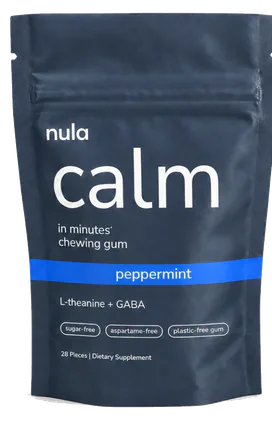
Nula Calm Gum
100 mg L-theanine + 50 mg GABA in every piece. caffeine-free. chew 1–2 pieces for at least three minutes.
shop calm