Three emails land at the same time. Your kid's school calls. A deadline that was Friday just moved to tomorrow. Your partner texts something that needs a real response — not later, now. It's not one thing. It's everything, all at the same time.
Your chest tightens. Your brain scrambles to prioritize, but nothing sticks. You start one thought, abandon it, start another. You feel frozen and frantic simultaneously — like your body wants to sprint but your feet are nailed to the floor.
This is what happens when stress hits all at once. Not a slow build. Not background pressure you can manage across the week. A pileup. And when it lands, the normal coping strategies — take a walk, journal about it, sleep on it — don't match the moment. You need something that works in 60 seconds, because that's all the time you have before the next thing demands your attention.
Why Sudden Stress Feels Different Than Everyday Pressure
Everyday stress is linear. One thing adds weight. You adjust. You carry it. But when multiple stressors hit simultaneously, your nervous system doesn't just add them together — it can tip past a threshold into full overwhelm.
Your autonomic nervous system is designed to manage threats one at a time. When several arrive at once, your sympathetic nervous system floods the body with adrenaline and cortisol at a rate that overwhelms your capacity to process. The result is a state that feels less like "stress" and more like a system crash.
Here's what that looks like:
-
Chest tightness or pressure — your breathing muscles lock under sympathetic overload
-
Mental paralysis — your prefrontal cortex (the decision-making center) goes offline
-
Shallow, rapid breathing — your body shifts to survival breathing, not functional breathing
-
Inability to prioritize — everything feels equally urgent and equally impossible
-
Emotional flooding — frustration, panic, and helplessness hit at the same time
-
Physical tension everywhere — jaw, shoulders, hands, stomach all tighten simultaneously
This is the acute stress response at full volume. And here's the critical insight: the goal isn't solving all the problems at once. The goal is getting your nervous system out of lockup so you can think again. You can't prioritize, plan, or respond clearly from inside the freeze. You have to break the freeze first.
6 Ways to Reset When Stress Hits All at Once
These techniques are built for the moment of overwhelm — not for a quiet evening after it's over. They work in real time, require no equipment, and most take under a minute.
1. Extended Exhale Breathing
This is the fastest way to shift your nervous system out of panic mode when stress hits all at once.
How to do it:
-
Inhale through your nose for 4 seconds
-
Exhale slowly through your mouth for 6-8 seconds
-
Focus on making the exhale longer than the inhale
-
Repeat for 5 breath cycles
Why it works: Longer exhales activate your vagus nerve, which triggers your parasympathetic nervous system — the counterbalance to fight-or-flight. Research from Stanford University's Huberman Lab has shown that this extended exhale pattern (sometimes called a "physiological sigh") is one of the fastest real-time interventions for downregulating the stress response. Five cycles is enough to measurably lower your heart rate and begin restoring access to your prefrontal cortex.
2. Name the Overwhelm Out Loud
This sounds too simple to work. It works anyway.
How to do it:
-
Say out loud: "I'm overwhelmed right now"
-
You don't need to say it to anyone — say it to yourself, in your car, at your desk, under your breath
-
Name the feeling specifically: "I'm overwhelmed" works better than "I'm stressed" because it's more precise
-
One sentence. That's it.
Why it works: This is a technique called affect labeling, and it's backed by research from UCLA's Matthew Lieberman. When you put a name to an emotion, it reduces activity in the amygdala (your brain's alarm center) and increases activity in the prefrontal cortex. In other words, labeling the overwhelm literally shifts brain activation from the panic zone to the thinking zone. Speaking it out loud increases the effect because it adds auditory processing to the labeling.
3. Pick ONE Thing (Not the Most Important — Just the Next One)
When everything feels urgent, the instinct is to find the "most important" thing and start there. But under overwhelm, your brain can't rank priorities — and trying to forces you deeper into the freeze.
How to do it:
-
Don't try to figure out what matters most
-
Pick the smallest, most obvious next action — any of them
-
It can be as simple as "reply to that text" or "close three browser tabs" or "put shoes on"
-
Do that one thing. Then pick the next one.
Why it works: Decision paralysis is a hallmark of stress overwhelm. Your brain is stuck in a priority loop where everything feels equally urgent. Picking one thing — even an arbitrary one — breaks the loop. Action restores agency. Movement creates momentum. The first task doesn't need to be the right one. It just needs to get you unstuck.
4. Cold Water Reset
Sudden cold activates your dive reflex, a mammalian response that immediately slows your heart rate and calms your nervous system.
How to do it:
-
Splash cold water on your face, focusing on your forehead and cheeks
-
Alternatively, run cold water over the insides of your wrists for 15-20 seconds
-
If you have ice available, hold an ice cube in each hand for 10 seconds
-
Even cold water from a drinking fountain on your wrists works
Why it works: The dive reflex is mediated by the vagus nerve and is one of the fastest known physiological resets. Cold water on the face triggers an automatic parasympathetic response that lowers heart rate and blood pressure within seconds. This is why cold exposure has been studied as an intervention for acute anxiety and panic. It bypasses the thinking brain entirely and works at the nervous system level.
5. The 90-Second Emotion Rule
Neuroanatomist Jill Bolte Taylor observed that the chemical process of an emotion — from trigger to peak to dissipation — takes approximately 90 seconds. After that, any continuation of the feeling is being fueled by your thoughts, not your biology.
How to do it:
-
When the wave of overwhelm hits, note the time (or just start counting slowly)
-
For 90 seconds, don't try to fix anything — just let the feeling move through
-
Breathe normally. Don't fight the sensation, don't analyze it, don't narrate it
-
After 90 seconds, check in: the intensity should have noticeably dropped
Why it works: Most people try to think their way out of overwhelm immediately, which keeps feeding the emotional loop. The 90-second rule gives your neurochemistry time to complete its cycle. The stress chemicals (adrenaline, cortisol) that flooded your system have a natural arc. If you don't add more fuel — through catastrophizing, ruminating, or trying to solve everything at once — the peak passes. What remains is still stress, but it's manageable stress. The kind you can work with.
6. Physical Discharge — Shake, Press, Move
Stress loads energy into your muscles. If that energy doesn't go anywhere, it keeps cycling through your body as tension.
How to do it:
-
Shake your hands loosely at your sides for 10-15 seconds, like flicking water off your fingertips
-
Press your palms together hard in front of your chest for 10 seconds, then release
-
Pace for 30 seconds — not aimlessly, but deliberately, as a physical reset
-
Push against a wall with both hands for 10 seconds, then release
Why it works: This is called somatic discharge, and it's a core principle in trauma and stress research. When your sympathetic nervous system activates, it prepares your muscles for action (fight or flight). If no physical action happens, that energy stays trapped as tension and restlessness. Giving it a physical outlet — even a brief one — completes the stress cycle and signals to your nervous system that the threat has been addressed.
The 60-Second Reset Routine
If you only have one minute, use this sequence:
| Step | Action | Time |
| 1 | Extended exhale breathing — inhale 4 sec, exhale 6-8 sec, 5 cycles | 30 sec |
| 2 | Name it out loud — "I'm overwhelmed right now" | 5 sec |
| 3 | Shake hands or press palms together — discharge the physical tension | 10 sec |
| 4 | Pick one next action — not the most important, just the next one | 15 sec |
Total: 60 seconds. This won't solve everything. But it will get your nervous system out of lockup and your thinking brain back online — and that's the prerequisite for solving anything.
Why Speed Matters When Overwhelm Hits
When stress piles up, your prefrontal cortex — the part of your brain responsible for planning, prioritizing, and making rational decisions — goes offline. Your amygdala takes over, and it only knows three modes: fight, flight, or freeze. In most modern stress pileups, freeze wins.
The longer you stay in the freeze, the harder it is to re-engage. Overwhelm compounds. Minutes without intervention become an hour of paralysis, which becomes a day of avoidance, which makes the original stressors worse.
Fast intervention matters because it reopens the thinking brain before the freeze solidifies. You don't need to solve the problems in 60 seconds. You just need to restore your ability to think about them. That's the difference between staring at your inbox for 45 minutes and actually answering one email. The first action — no matter how small — breaks the cycle.
When Stress Piles Up: Real-Life Scenarios
Overwhelming stress rarely comes from one source. It comes from collision — multiple demands, multiple timelines, multiple emotional loads landing in the same window. Here are the most common pileup patterns:
-
Work deadlines stacking — three projects due the same week, each one "the priority"
-
Parenting and work collision — a sick kid, a big meeting, and no backup plan, all on the same morning
-
Bad news on top of a hard day — you were already stretched thin, and then something breaks
-
Financial stress layering — an unexpected bill arrives during an already tight month
-
Health scares during busy periods — a worrying test result when you can't afford to slow down
-
Relationship conflict during life transitions — a hard conversation with your partner while you're also dealing with work pressure or preparing for something high-stakes
-
Moving, job changes, or life transitions — when the logistics alone would be overwhelming, and emotions are running high on top of it
The techniques above work across all of these scenarios because they target the nervous system, not the situation. The situation is different every time. The overwhelm response is the same.
Some people keep a fast-acting reset nearby for moments like this — something they can reach for when the stress pileup hits and they need to come back online fast. Not a long-term solution. Just a way to break the freeze in the moment so they can start thinking clearly again.
Frequently Asked Questions
What do you do when stress hits all at once?
The most effective immediate response is a 60-second nervous system reset: extended exhale breathing (inhale 4 seconds, exhale 6-8 seconds) for 5 cycles, naming the overwhelm out loud ("I'm overwhelmed right now"), a brief physical discharge like shaking your hands or pressing your palms together, and then picking one small next action. The goal is not to solve everything — it's to break the freeze so your thinking brain comes back online.
Why does everything feel overwhelming at the same time?
When multiple stressors arrive simultaneously, your autonomic nervous system can tip past its processing threshold. Your brain's alarm system (the amygdala) floods your body with stress hormones, while your decision-making center (the prefrontal cortex) goes offline. This creates the sensation that everything is equally urgent and equally impossible. It's not that the problems are unsolvable — it's that your nervous system is in a state where it can't evaluate them clearly.
How do I stop feeling paralyzed by stress?
Stress paralysis happens when your nervous system shifts into a freeze response — a survival state where action feels impossible. To break it, start with your body, not your to-do list. Extended exhale breathing for 30 seconds, followed by any small physical movement (shaking your hands, pacing, pressing your palms together), can shift you out of freeze. Then pick one tiny action — any action — and do it. Movement creates momentum, and momentum breaks paralysis.
Is it normal to shut down when overwhelmed?
Yes. Shutting down under overwhelming stress is a well-documented nervous system response called the freeze state. It's part of the same survival system as fight and flight, and it activates when your brain determines that the threat is too large to fight or escape. In modern life, this often looks like staring at a screen without doing anything, feeling unable to start, or going emotionally numb. It's a biological response, not a character flaw, and it can be interrupted with nervous system regulation techniques.
How long does acute stress last?
The initial chemical surge of acute stress — the flood of adrenaline and cortisol — typically peaks within minutes and can begin subsiding in as little as 90 seconds if you don't continue feeding it with rumination or catastrophizing. However, if the stressors persist or you stay in a heightened state without intervention, the effects can last hours. Elevated cortisol levels from a significant stress event can take several hours to fully normalize. Fast intervention shortens this window significantly.
Can you train yourself to handle sudden stress better?
Yes. The nervous system is trainable. Regular practice with breathing techniques, physical regulation tools, and affect labeling builds what researchers call stress resilience — the ability to recover from acute stress more quickly. People who practice extended exhale breathing daily, for example, tend to have higher vagal tone, which means their parasympathetic nervous system activates faster under pressure. The techniques in this guide work in the moment, but they also build long-term capacity if used consistently.
If your stress overwhelm is frequent, severe, or accompanied by symptoms like panic attacks, persistent insomnia, or an inability to function in daily life, please consult a mental health professional. The techniques in this article are designed for normal situational stress responses and are not a substitute for professional care.
Key Takeaway
Longer exhale. Name it. Pick one thing. Move.
You don't need to solve every problem in the pileup. You just need to break the freeze long enough to take one step — and the rest will follow from there.
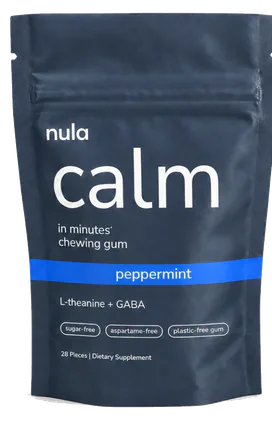
Nula Calm Gum
100 mg L-theanine + 50 mg GABA in every piece. caffeine-free. chew 1–2 pieces for at least three minutes.
shop calm